Programmable Memory Presets: The Key to Consistent Ergonomics
When standing desks first entered the mainstream market, the vast majority featured a simple two-button handset: one button for moving the desk up, and another for moving it down. While functional, this basic setup required the user to hold the button and visually guess the correct height each time they transitioned from sitting to standing. Today, the programmable memory preset controller is considered an industry standard, and for good reason.
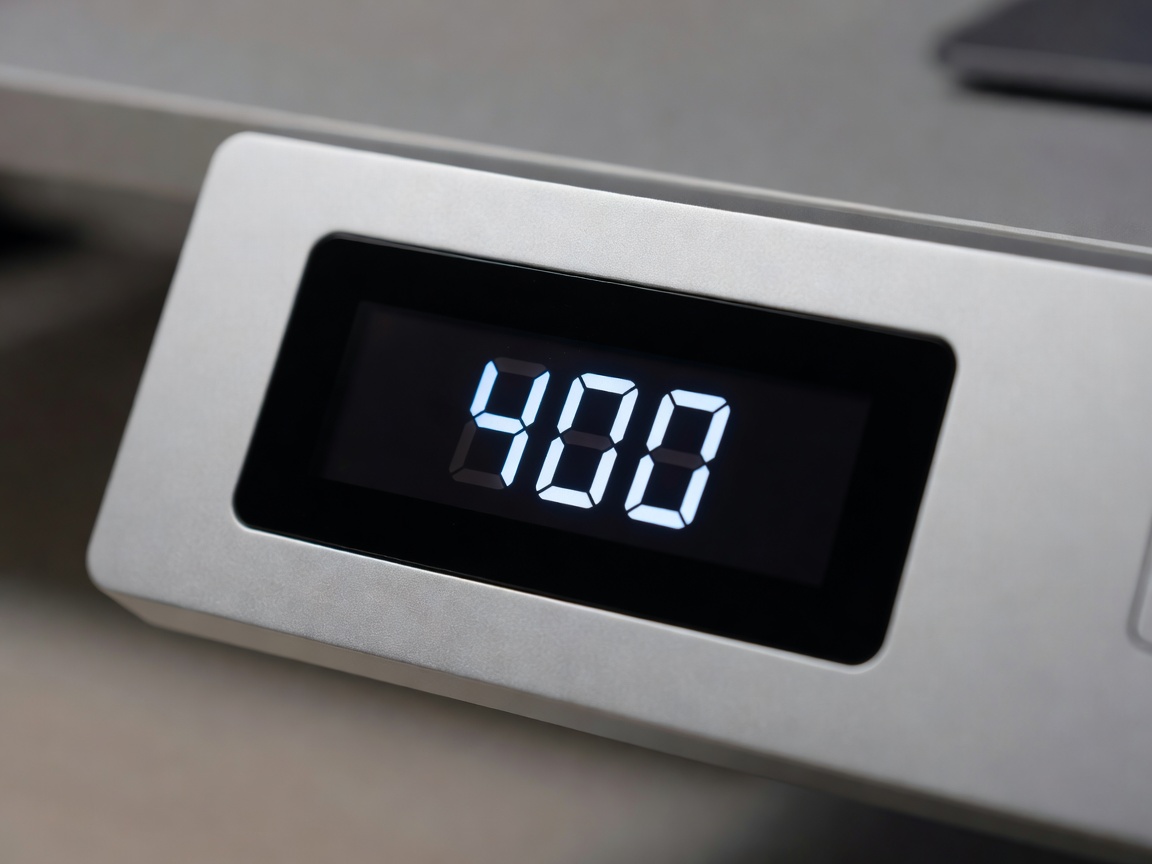
How Memory Presets Work Mechanically
Modern desk frames utilizing memory presets rely on highly accurate Hall effect sensors embedded directly onto the motor shafts within the lifting columns. As the motor spins to raise or lower the desk, the Hall effect sensor measures the magnetic pulses generated by the rotation.
The control box (the central computer mounted under the desk) counts these pulses. Because the control box knows exactly how much linear travel corresponds to one motor rotation, it can track the desk's height down to a fraction of a millimeter. When you program a preset, the control box simply saves the current pulse count into its non-volatile memory. When you press the preset button later, the control box drives the motors until the real-time pulse count matches the saved value, decelerating smoothly as it approaches the target to prevent jarring stops.
The Ergonomic Argument for Memory Slots
The primary benefit of a memory controller is the elimination of ergonomic compromise. Proper ergonomics requires precise angles: your elbows should be at a 90-degree angle to the keyboard, and your monitor should be at eye level. If you have to guess your desk height every time you stand up, you are likely to be off by an inch or two.
Over an eight-hour workday, sitting or standing at a desk that is slightly too high causes shoulder elevation, leading to trapezius and neck pain. A desk that is slightly too low encourages slouching and forward head posture. By saving your optimal sitting and standing heights into memory slots 1 and 2, you guarantee perfect posture alignment with a single touch.
One-Touch vs. Constant-Touch Operation
When selecting a controller with memory presets, it is vital to understand the difference between operating modes:
- One-Touch (Express) Memory: You press the preset button once, release it, and the desk moves automatically to the programmed height. This is highly convenient but requires reliable anti-collision sensors, as the desk moves unmonitored.
- Constant-Touch Memory: You must press and hold the preset button until the desk reaches the saved height. If you release the button, the desk stops. This is common in commercial environments to comply with strict safety regulations, preventing unattended desk movement that could crush objects.
Sharing Workspaces
In hot-desking office environments or homes where partners share a home office, having 3 to 4 memory presets is essential. User A can use slots 1 (sit) and 2 (stand), while User B utilizes slots 3 and 4. This seamless transition makes sharing an ergonomic workspace viable without the frustration of constant recalibration.