Bluetooth & App Integration: The Smart Desk Revolution
As the Internet of Things (IoT) expands into office furniture, standing desk controllers are evolving from simple up/down switches into smart, connected health devices. Bluetooth integration is quickly becoming a highly sought-after feature for users looking to maximize the health benefits of their sit-stand workflow.
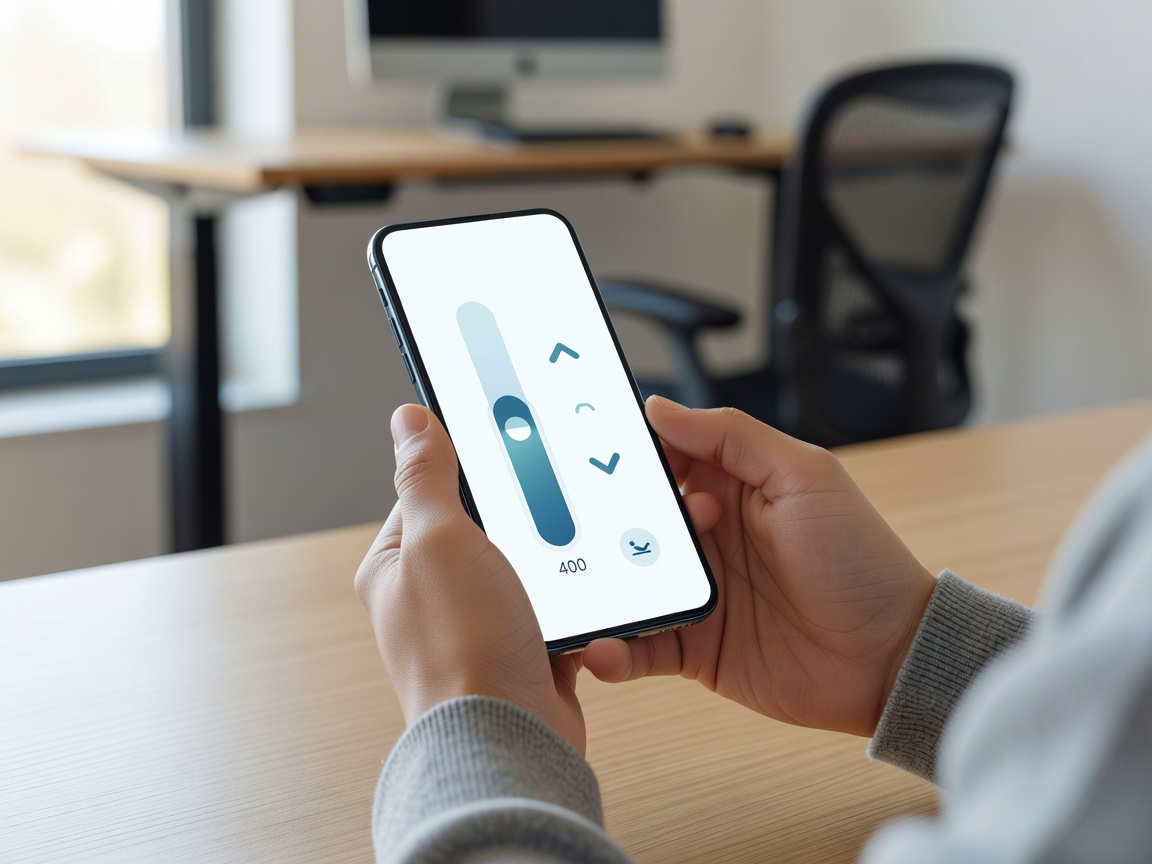
How Bluetooth Desk Controllers Work
Smart desk systems operate by embedding a Bluetooth Low Energy (BLE) module directly into the control box or the keypad handset. Once paired with a companion app on iOS or Android, the smartphone can send height adjustment commands to the control box and receive data regarding the desk's current position and usage statistics.
This two-way communication enables a host of features that traditional physical controllers cannot match:
- Remote Adjustment: Raising or lowering the desk via the phone interface.
- Activity Tracking: The app monitors how many minutes per day the desk remains in a "standing" position versus a "sitting" position.
- Caloric Burn Estimation: By inputting your height and weight, the app calculates an estimated metabolic burn rate based on your standing durations.
Automated Sit-Stand Reminders
The biggest hurdle in standing desk adoption is behavioral: users simply forget to stand. While some physical keypads feature built-in buzzers or LED light strips that flash when it is time to move, they can be easy to ignore or overly disruptive in a quiet office.
Bluetooth integration solves this by pushing notifications directly to your smartphone or smartwatch. Users can configure specific intervals (e.g., sit for 45 minutes, stand for 15 minutes). When the interval triggers, a silent notification prompts the user to change posture. Some advanced systems allow the desk to perform a subtle "hiccup"—a micro-movement up and down—as a physical nudge to the user.
Challenges and Considerations
While app integration offers distinct advantages, there are factors to consider before purchasing a Bluetooth-enabled controller:
App Longevity: The functionality relies heavily on software maintenance. If the desk manufacturer stops updating the companion app to comply with new iOS or Android versions, the smart features may become obsolete, leaving you with just the physical keypad functions.
Privacy: Health tracking requires data collection. Review the app's privacy policy to understand whether your activity data is stored locally on your device or uploaded to cloud servers, especially if using the desk in a corporate environment with strict data security requirements.
The Future of Workspace Connectivity
Looking forward, we anticipate greater integration between standing desk controllers and broader smart home ecosystems (like Apple Health or Google Fit). The ultimate goal is a frictionless environment where your workstation automatically adapts to your presence, biometric feedback, and daily health goals without manual intervention.